%201.svg)







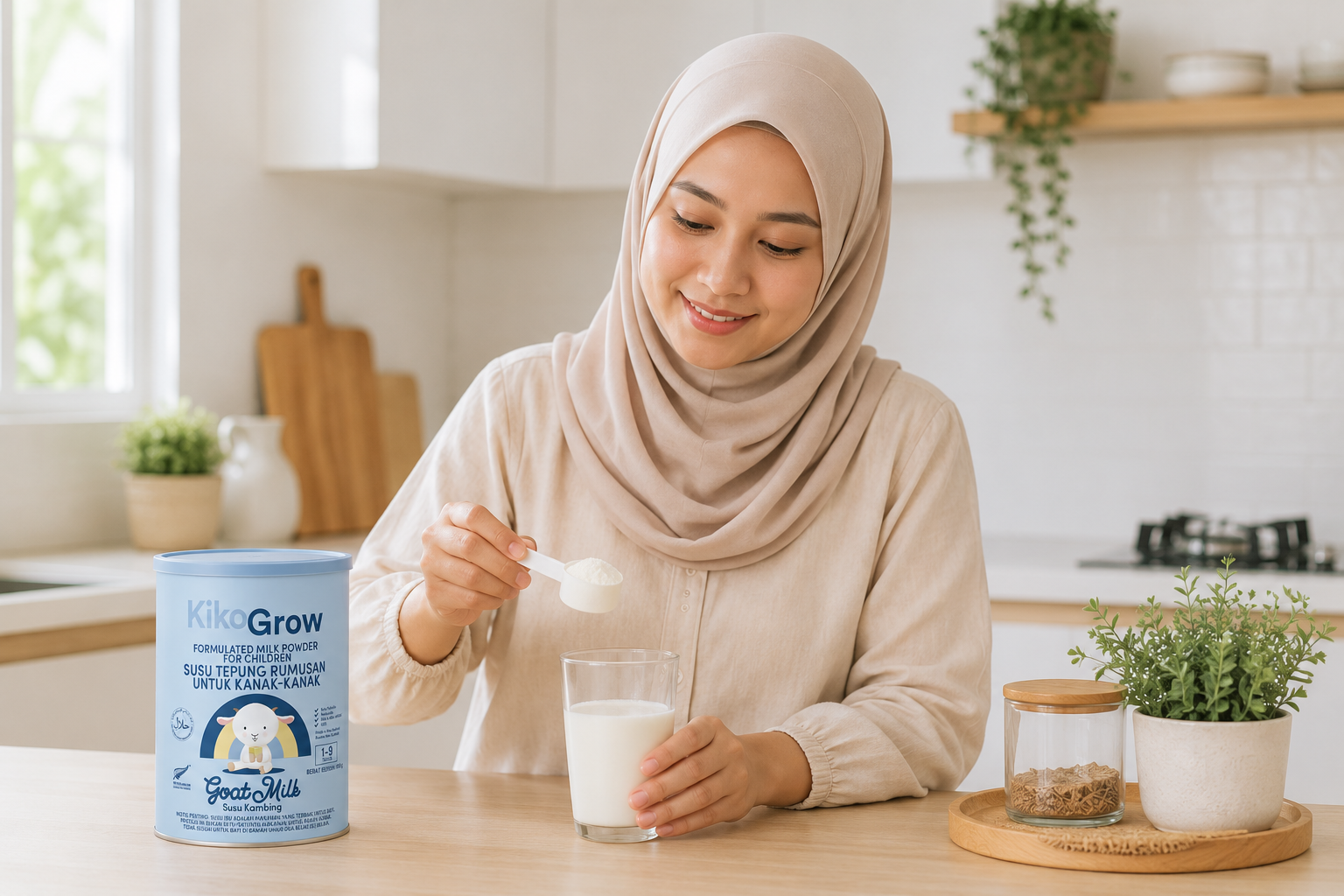
Kiko Goat Milk has become a recognised choice for families seeking high-quality goat milk as part of a balanced nutritional approach. When selecting a nutritional product for children, many parents look beyond the label to understand the quality of the ingredients, the sourcing of the milk, and the nutritional composition that supports everyday wellbeing. Learning about how goat milk is produced, its naturally occurring nutrients and the careful manufacturing process can help families make informed decisions.
In Malaysia, awareness of goat milk nutrition continues to grow as parents explore different dairy options that suit their family's preferences. Kiko Goat Milk is developed using carefully sourced goat milk and thoughtfully formulated ingredients designed to provide balanced nutrition suitable for different stages of childhood. Current research suggests that goat milk contains several naturally occurring characteristics that distinguish it from cow's milk, including its protein profile, fat structure and mineral composition.
While Kiko Goat Milk is designed to provide balanced nutrition, every child has unique dietary needs. Choosing any milk product should always take into account age, nutritional requirements and personalised professional guidance where appropriate.
Understanding Kiko Goat Milk
Kiko Goat Milk is based on high-quality goat milk, a natural dairy ingredient valued for its rich nutritional profile and distinctive composition. Goat milk has been enjoyed for generations and is commonly used in products designed to support balanced nutrition for growing children.
Goat milk is naturally rich in:
- High-quality protein
- Calcium
- Potassium
- Phosphorus
- Magnesium
- Vitamin A
- Naturally occurring healthy fats
Current research suggests that goat milk typically contains higher levels of vitamin A than cow's milk and provides valuable minerals that contribute to normal growth and body function as part of a varied diet.
When families consider Kiko Goat Milk, they are often interested in understanding how the milk is sourced, processed and formulated to maintain consistent quality.
How Goat Milk Is Produced
The journey of Kiko Goat Milk begins on carefully managed farm environments where healthy goats are raised under suitable conditions.
Like other dairy animals, dairy goats naturally begin producing milk after giving birth. Peak production generally occurs during the weeks following kidding, after which milk production gradually changes throughout the lactation cycle.
Regular milking follows carefully managed routines that prioritise animal wellbeing and milk quality. The collected milk then undergoes several carefully controlled processing stages before being used in nutritional products.
Current manufacturing practices typically include:
- Milk collection
- Filtration
- Pasteurisation
- Quality assessment
- Careful formulation
- Packaging
Current research suggests that filtration and pasteurisation remain important processing steps that help maintain product safety and quality before the milk is transformed into powdered nutritional products.
The Nutritional Profile of Goat Milk
One of the reasons many families choose Kiko Goat Milk is its naturally balanced nutritional composition.
Goat milk provides several nutritional benefits, including naturally occurring:
- Protein
- Calcium
- Potassium
- Magnesium
- Phosphorus
- Vitamin A
- Healthy milk fats
Current research suggests that goat milk naturally contains about 10% less lactose than cow's milk. Although lactose is still naturally present, this difference has contributed to growing interest among families exploring alternative dairy options.
Goat milk also contains more short- and medium-chain fatty acids than cow's milk. These naturally occurring fats continue to be studied for their role in normal digestion and nutrient utilisation.
Because of its nutrient density, goat milk contributes valuable nutrients as part of a varied dietary pattern that supports normal growth and everyday wellbeing.
Protein Structure and Digestive Characteristics
Current research suggests that one of the distinguishing characteristics of goat milk is its goat milk protein profile.
Goat milk contains:
- Lower levels of αs1-casein protein
- A higher proportion of A2 beta-casein proteins
- Naturally smaller fat globules
These characteristics influence the way milk behaves during digestion.
Current research suggests that goat milk proteins form a softer curd than many cow milk proteins during digestion. Combined with naturally smaller fat globules, these structural characteristics have attracted scientific interest regarding nutrient digestion.
Goat milk fat also remains naturally dispersed throughout the milk, meaning it does not generally require artificial homogenisation to prevent cream separation.
Digestive experiences naturally vary between individuals, and nutritional suitability should always be considered according to each child's individual needs.
Nutrition That Supports Everyday Growth
Balanced nutrition involves much more than individual ingredients.
Kiko Goat Milk is formulated to provide balanced nutrition by combining high-quality goat milk with carefully selected nutrients suitable for children at different stages of growth.
Current research suggests that nutrients naturally found in goat milk contribute to:
- Normal bone development through calcium
- Normal muscle function
- Energy metabolism
- Everyday growth
- General wellbeing
Goat milk also provides complete high-quality protein that contributes to normal growth and tissue development when consumed as part of a balanced diet.
Rather than focusing on isolated nutrients, nutrition is most beneficial when considered as part of an overall healthy eating pattern.
Taste and Naturally Creamy Texture
Many families notice the naturally distinctive flavour of goat milk.
Current research suggests that goat milk is often described as having a smooth, cream-like texture with a mildly tangy flavour profile. The exact taste may vary depending on farming practices, seasonal feeding and processing methods.
Goat milk can also be used to produce a variety of dairy foods, including cheese, yoghurt and nutritional milk products.
Because goat milk contains naturally dispersed fat globules, it maintains a smooth consistency that contributes to its creamy texture without requiring extensive homogenisation.
These naturally occurring characteristics are part of what makes goat milk unique while remaining suitable for a wide range of dairy applications.
Choosing Kiko Goat Milk in Malaysia
For families in Malaysia, selecting a nutritional product often involves considering ingredient quality, product consistency and suitability for everyday family life.
When choosing Kiko Goat Milk, practical considerations include:
- Nutritional profile
- Product quality
- Preparation instructions
- Proper storage
- Age suitability
- Daily nutritional requirements
Current research suggests that every child has unique nutritional needs, and milk products should be selected according to those individual requirements.
Parents are encouraged to read preparation guidance carefully and consult an appropriately qualified doctor or healthcare professional whenever significant dietary changes are being considered.
Whole Goat Milk and Carefully Selected Ingredients
One of the features of Kiko Goat Milk is the use of high-quality whole milk sourced from goat milk. Whole goat milk naturally contains milk fat together with valuable nutrients that contribute to a balanced nutritional profile.
Current research suggests that naturally occurring milk fat contains short- and medium-chain fatty acids, together with fat-soluble vitamins that play important roles in everyday nutrition. Rather than relying entirely on added fats, formulations that begin with whole goat milk retain many of the naturally occurring components found in fresh milk.
Kiko Goat Milk is carefully produced using controlled manufacturing processes that aim to maintain consistency, quality and nutritional integrity throughout production.
Goat Milk Protein and Digestive Characteristics
The naturally occurring goat milk protein profile continues to be an area of scientific interest.
Current research suggests that goat milk:
- Contains lower levels of αs1-casein protein than cow's milk.
- Relies primarily on A2 beta-casein proteins.
- Forms a softer curd during digestion.
- Contains naturally smaller fat globules.
These structural characteristics may influence how the milk behaves during normal digestion. An emerging role has been observed regarding the formation of softer curds, although digestive experiences naturally vary between individuals.
Goat milk is also naturally homogenised because its fat globules remain evenly dispersed throughout the milk, reducing cream separation without requiring extensive artificial homogenisation.
Lactose and Everyday Digestive Comfort
Many parents researching Kiko Goat Milk also want to understand its natural lactose content.
Current research suggests that goat milk contains approximately 10% less lactose than cow's milk, although lactose remains a naturally occurring carbohydrate within goat milk.
Because of its different protein structure and naturally dispersed fat globules, goat milk has attracted interest regarding normal digestion. Some research has observed that goat milk may be easier for many individuals to digest than cow's milk, although individual responses differ and this should not be considered a guaranteed outcome.
Families introducing a new milk product should monitor how their child responds and seek personalised guidance whenever questions arise.
Calcium and Essential Nutrition
Balanced nutrition depends on the combination of many nutrients working together.
Kiko Goat Milk naturally provides important nutrients including:
- Calcium
- Phosphorus
- Potassium
- Magnesium
- Vitamin A
- High-quality protein
Current research suggests these nutrients contribute to normal growth, bone development, muscle function and energy metabolism when consumed as part of a balanced diet.
Goat milk is also recognised for its naturally rich nutritional density. Compared with cow's milk, current research suggests goat milk generally provides higher amounts of calcium, potassium and vitamin A.
These naturally occurring nutrients contribute to the overall nutrition offered by Kiko Goat Milk.
Quality from Farm to Finished Product
Every stage of production plays an important role in maintaining product quality.
Milk used for Kiko Goat Milk begins with carefully managed farm practices where healthy goats are raised under suitable conditions.
After collection, the milk undergoes carefully controlled processing that commonly includes:
- Filtration
- Pasteurisation
- Quality assessment
- Nutritional verification
- Controlled drying
- Packaging
Current research suggests that filtration and pasteurisation remain essential processing steps that help maintain food safety while preserving the natural nutritional qualities of goat milk.
Each stage of production focuses on consistency before the final product reaches families.
Supporting Everyday Wellbeing
Nutrition influences many aspects of everyday life.
Current research suggests that balanced nutrition contributes to:
- Normal growth
- Bone health
- Muscle function
- General wellbeing
- Everyday energy metabolism
Goat milk naturally contains complete high-quality protein together with essential vitamins and minerals that support these normal body functions.
Some studies have also explored the potential benefits of goat milk regarding nutrient absorption because of its naturally occurring fat structure and protein composition. Additional research continues in this area.
Rather than focusing on individual nutrients alone, families are encouraged to consider complete dietary patterns that include nutritious foods, physical activity and adequate rest.
Important Considerations for Parents
While Kiko Goat Milk provides balanced nutrition, there are several practical points parents should remember.
Current research suggests:
- Whole goat's milk is not recommended as the main drink for children in the early life stage.
- Unmodified goat milk does not naturally provide adequate amounts of iron and certain vitamins required during early development.
- Properly formulated goat milk products are specifically designed to provide balanced nutrition appropriate for their intended age group.
- Goat milk proteins may still trigger allergic reactions similar to cow's milk in sensitive individuals.
- Any significant feeding changes should be discussed with an appropriately qualified doctor or healthcare professional.
These considerations help families make informed nutritional decisions while recognising that every child's dietary needs are different.
Kiko Goat Milk for Families in Malaysia
For many families in Malaysia, selecting a nutritional product involves balancing quality, nutrition and practicality.
When considering Kiko Goat Milk, families often review:
- Ingredient quality
- Nutritional profile
- Preparation guidance
- Product consistency
- Everyday convenience
Reading product information carefully before adding items to the cart, following preparation instructions and storing products appropriately all contribute to maintaining product quality after orders are received.
Understanding the complete nutritional profile allows families to make informed choices based on balanced nutrition rather than isolated product claims.
Frequently Asked Questions About Kiko Goat Milk
Families often have practical questions before choosing Kiko Goat Milk. Understanding how goat milk is produced, its nutritional characteristics and its appropriate use can help parents make informed decisions for their children.
Is Kiko Goat Milk suitable for every child?
Every child has unique nutrition and dietary requirements. Current research suggests that children may respond differently to dairy products, so families should consider individual nutritional needs and seek personalised guidance from an appropriately qualified doctor or healthcare professional when introducing a new milk product.
Can Kiko Goat Milk replace maternal nutrition during the early life stage?
No. During the early life stage, maternal milk remains the recommended nutrition source where appropriate. If additional nutrition is required, parents should seek professional advice before selecting a suitable formula. Whole goat's milk is not recommended as the primary drink during the early life stage because it does not naturally provide adequate amounts of iron and certain vitamins required for normal development.
Goat Milk and Everyday Nutrition
One reason families consider Kiko Goat Milk is its naturally rich nutritional profile.
Current research suggests that goat milk provides:
- Complete high-quality protein
- Calcium
- Potassium
- Magnesium
- Phosphorus
- Vitamin A
- Naturally occurring healthy fats
These nutrients contribute to normal growth, bone development, muscle function and everyday wellbeing when consumed as part of a varied and balanced diet.
Some research has also explored the benefits of goat milk regarding nutrient absorption because of its naturally occurring fat structure and protein composition. Additional research continues in this area, and individual experiences naturally differ.
Understanding Digestive Characteristics
The naturally occurring characteristics of Kiko Goat Milk continue to attract scientific interest.
Current research suggests that goat milk:
- Forms a softer curd during digestion than many cow milk products.
- Contains naturally smaller fat globules.
- Contains approximately 10% less lactose than cow's milk.
- Naturally relies primarily on A2 beta-casein proteins.
- Contains lower levels of αs1-casein protein.
These structural characteristics may influence digestion for some individuals. However, digestive responses vary, and goat milk should not be viewed as a guaranteed solution for digestive concerns.
It is also important to understand that goat milk proteins may still trigger allergic reactions in sensitive individuals in a similar way to cow's milk proteins.
From Farm to Family
Every pack of Kiko Goat Milk begins with carefully managed dairy farm practices.
Healthy goats are milked using established dairy procedures similar to those used across the dairy industry. The collected milk then passes through carefully controlled stages including:
- Filtration
- Pasteurisation
- Quality assessment
- Nutritional verification
- Packaging
Current research suggests that these production steps help maintain product quality and food safety while preserving the naturally occurring nutritional characteristics of goat milk.
Maintaining consistency throughout production helps ensure families receive a product prepared according to carefully controlled manufacturing standards.
Everyday Practical Guidance
When using Kiko Goat Milk, families may find the following practices helpful:
- Read all preparation instructions before use.
- Store the product according to the packaging guidance.
- Prepare each serving carefully using clean equipment.
- Close the container securely after opening.
- Check the recommended storage period after opening.
- Monitor the child's response whenever introducing a new nutritional product.
Many parents also review product information before completing orders or adding items to the cart, ensuring the selected products are appropriate for the child's age and nutritional requirements.
Why Parents Continue to Consider Kiko Goat Milk
For many families in Malaysia, Kiko Goat Milk is considered because of its carefully selected ingredients, balanced nutritional profile and consistent production approach.
Parents often value:
- High-quality goat milk
- Naturally occurring nutrients
- Carefully controlled production
- Balanced nutrition
- High-quality protein
- Naturally rich calcium
- Smooth, creamy texture
- Practical preparation guidance
Current research suggests that goat milk provides a combination of naturally occurring nutrients that contribute to normal body function and healthy growth as part of a varied diet.
Rather than relying on a single nutritional feature, many families consider the overall ingredient quality, formulation and suitability for their child's individual nutritional needs.
Kiko Goat Milk combines carefully sourced goat milk with thoughtfully developed formulation to provide balanced nutrition for growing children. Its naturally occurring protein profile, smaller fat globules, valuable minerals and vitamins contribute to a nutritional profile that continues to attract interest among families looking for quality dairy nutrition.
Current research suggests that goat milk contains naturally higher levels of vitamin A, calcium and potassium than cow's milk, together with complete high-quality protein and naturally occurring short- and medium-chain fatty acids. These characteristics contribute to normal growth, bone health and everyday body functions when consumed as part of a balanced dietary pattern.
At the same time, it is important to recognise that whole goat's milk is not appropriate as the primary drink during the early life stage, and goat milk proteins may still trigger allergic reactions in sensitive individuals. Nutritional choices should always reflect the child's individual needs, and professional guidance should be sought whenever significant dietary changes are being considered.
For families in Malaysia, understanding how Kiko Goat Milk is sourced, produced, processed and formulated provides valuable context when selecting a nutritional product. By considering ingredient quality, nutritional composition and practical preparation guidance, parents can make informed decisions that align with their family's everyday nutritional goals.
Disclaimer
This article is provided for educational and informational purposes only. It does not replace personalised advice from a qualified healthcare professional or nutrition specialist. Every child has individual nutritional requirements, and dietary decisions should be made according to personal circumstances and appropriate professional guidance.