




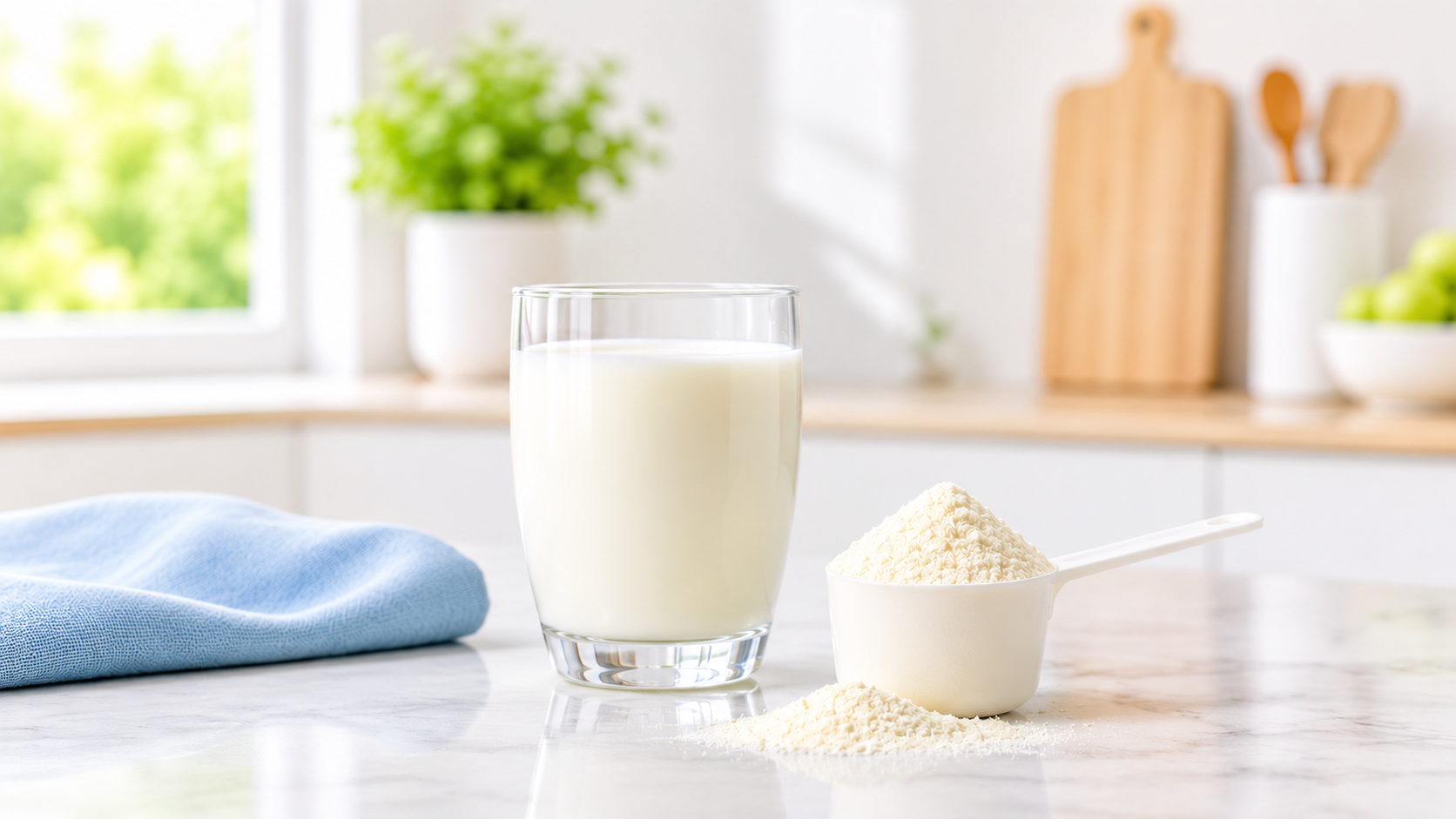
Protein is one of the most important components of milk, contributing to its nutritional value, physical properties and role in everyday diets. Goat milk powder is a concentrated dairy ingredient that contains a mixture of milk proteins, amino acids, minerals, fats and carbohydrates. Its protein composition has attracted interest among food researchers and nutrition professionals because of the differences in protein fractions, casein structures and whey components found in goat milk.
Understanding protein composition in goat milk powder involves looking beyond the total protein figure. Milk proteins are generally divided into two main groups: casein and whey proteins. Each group contains different proteins with distinct amino acid sequences, structural characteristics and functional properties.
Goat milk protein contains essential amino acids, including leucine, lysine, valine and threonine. It also contains different casein fractions, such as alpha-casein, beta-casein and kappa-casein, alongside whey proteins such as beta-lactoglobulin and alpha-lactalbumin.
The final protein quality of goat milk powder depends on several factors, including animal genetics, feeding practices, lactation stage, milk handling, processing and storage. This article explores these characteristics and explains what current research suggests about goat milk protein and its nutritional relevance.
What Is the Protein Composition in Goat Milk Powder?
The protein composition in goat milk powder refers to the different types and quantities of proteins present in the finished dairy ingredient.
Fresh goat milk naturally contains a mixture of casein and whey proteins. During powder production, much of the original protein content is retained, although processing conditions can influence protein structure and functionality.
The principal protein groups include:
- Casein proteins
- Whey proteins
- Enzymes and other minor proteins
- Naturally occurring protein fragments
Casein usually represents approximately 75–80% of the total protein in goat milk, while whey accounts for roughly 20–25%. These proportions are approximate and may vary with breed, lactation stage and analytical method.
The two groups perform different functions. Casein contributes to the formation of curds and provides amino acids, while whey proteins remain more soluble under many processing conditions.
Understanding their relative proportions helps explain the nutritional and functional characteristics of goat milk powder.
How Much Protein Does Goat Milk Powder Contain?
Protein content is an important consideration when evaluating milk powder. However, the exact quantity depends on whether the product is whole milk powder, skimmed milk powder or a specially prepared dairy ingredient.
Fresh goat milk commonly contains around 3–4% protein by weight. Removing much of its water increases the concentration of protein and other milk solids in the resulting powder.
A reported protein measurement of approximately 4.82 mg/mL may relate to a particular liquid sample or laboratory preparation. It should not be interpreted as the universal protein concentration of commercial goat milk powder.
The protein content of a powder is usually expressed as a percentage by weight or in grams per serving. It can vary according to:
- Original milk composition
- Water removal method
- Addition or removal of milk components
- Powder formulation
- Analytical measurement technique
For a meaningful comparison, protein figures should be assessed using the same measurement basis and preparation method.
The Two Main Protein Groups in Goat Milk
Goat milk proteins are divided into two major fractions: casein and whey.
Casein proteins are the main protein group in milk. They form organised structures called micelles, which contain proteins and minerals, particularly calcium and phosphorus.
Whey proteins remain in the liquid portion after casein separates during curd formation. They include beta-lactoglobulin, alpha-lactalbumin and several smaller protein components.
Both groups contribute amino acids to the diet. Their different structures also influence how milk behaves during heating, filtration, fermentation and digestion.
The balance between casein and whey is therefore an important part of milk composition and dairy ingredient development.
Understanding Casein Proteins
Casein is the principal protein fraction in goat milk. It is made up of several individual protein types that differ in their amino acid sequence and molecular structure.
The main casein groups include:
- Alpha-S1-casein
- Alpha-S2-casein
- Beta-casein
- Kappa-casein
These proteins are organised into micelles that help keep calcium and phosphorus dispersed in milk.
Casein contributes to the formation of curds during the preparation of cheese and other fermented dairy products. The structure of these curds depends on the protein composition, milk acidity, temperature and processing conditions.
Differences in casein proportions can therefore influence the texture and physical properties of goat milk products.
Alpha-S1-Casein and Its Importance
Alpha-S1-casein is one of the major casein proteins found in mammalian milk. Its proportion in goat milk can vary considerably between breeds and individual animals.
Some goat breeds naturally produce lower levels of alpha-S1-casein, while others produce higher amounts. Genetic variation is one of the main reasons that goat milk protein composition is not identical across all production systems.
Alpha-S1-casein contributes to the structure of casein micelles and the formation of milk curds.
In some comparative studies, goat milk has formed softer curd structures under particular experimental conditions. Differences in alpha-S1-casein, fat globules, calcium distribution and processing conditions may contribute to these observations.
However, it would be inaccurate to assume that all goat milk always forms a softer curd than all cow milk. Milk composition and preparation conditions matter.
Beta-Casein in Goat Milk
Beta-casein is another important component of goat milk protein. It contributes to the overall casein fraction and contains a sequence of amino acids arranged in a specific order.
Different forms of beta-casein exist across dairy species and individual animals. Goat milk commonly contains A2-type beta-casein, although protein variants and proportions can differ according to genetics.
Cow milk may contain A1-type beta-casein, A2-type beta-casein or a combination, depending on the animal.
The presence of a particular beta-casein variant does not establish that a milk product is hypoallergenic or suitable for everyone with milk protein sensitivity.
Researchers continue to examine the relationship between casein structure, digestion and the functional properties of dairy proteins.
The Amino Acid Sequence of Goat Beta-Casein
The amino acid sequence describes the specific order in which amino acids are connected within a protein molecule.
Goat beta-casein contains a sequence of amino acids that determines its structure and influences its physical and chemical properties.
One point of interest in comparative protein research is the amino acid at position 67 of goat beta-casein, which is proline in commonly described goat beta-casein sequences.
Such differences in amino acid sequence are relevant to understanding how proteins behave during digestion and processing.
However, a single amino acid position should not be used to make broad claims about the nutritional suitability or allergenic potential of an entire milk product.
Whey Protein in Goat Milk
Whey protein represents approximately 20–25% of the total protein in goat milk, although the exact proportion varies.
It includes several soluble proteins that remain in the liquid portion after casein separation.
The major whey proteins include:
- Beta-lactoglobulin
- Alpha-lactalbumin
- Serum albumin
- Immunoglobulins
- Other minor proteins and enzymes
These components contribute essential amino acids and functional properties.
Whey proteins are generally soluble under a range of conditions, although their solubility can change when exposed to heat, acidity or other processing factors.
Their nutritional contribution makes goat whey protein an important subject in dairy research and ingredient development.
Beta-Lactoglobulin: A Major Whey Protein
Beta-lactoglobulin is commonly identified as the major whey protein in goat milk.
It is a globular protein containing a specific amino acid sequence and contributes to the total whey protein content.
Its structure can change during heating. This process, known as protein denaturation, may affect solubility and interactions with other milk components.
Beta-lactoglobulin also contributes to the functional characteristics of milk ingredients, including their behaviour during processing.
It is important to recognise that beta-lactoglobulin is present in both goat and cow milk. Its presence means goat milk should not be considered automatically suitable for individuals who need to avoid milk proteins.
Alpha-Lactalbumin and Other Whey Components
Alpha-lactalbumin is another important whey protein found in goat milk.
It contains essential amino acids and contributes to the nutritional value of the whey fraction. Its structure and amino acid composition have been widely studied in milk science.
Other whey components include immunoglobulins, serum albumin and various enzymes.
The quantities of these proteins can vary according to the animal, lactation stage and milk handling conditions.
Some proteins are sensitive to heat and may undergo structural changes during processing. This is why the production method is an important consideration when discussing protein quality in goat milk powder.
Amino Acid Composition of Goat Milk Protein
Proteins are made from amino acids, which are connected through peptide bonds to form long molecular chains.
The amino acid composition of goat milk protein includes both essential and non-essential amino acids.
Essential amino acids must be obtained through the diet because the body cannot produce sufficient quantities of them.
Goat milk protein contains all nine essential amino acids:
- Histidine
- Isoleucine
- Leucine
- Lysine
- Methionine
- Phenylalanine
- Threonine
- Tryptophan
- Valine
It also contains non-essential amino acids, including aspartic acid, glutamic acid, alanine, glycine and proline.
The balance of these amino acids contributes to the nutritional value of goat milk powder.
Why Essential Amino Acids Matter
Essential amino acids have important roles in normal body functions.
They contribute to protein synthesis, tissue maintenance, enzyme production and the renewal of body structures.
Leucine is particularly relevant to research on muscle protein synthesis. It participates in signalling pathways involved in the body's response to dietary protein.
Goat milk protein contains leucine, and some composition studies have reported a relatively high leucine proportion in particular samples compared with selected cow milk samples.
However, the exact difference depends on the source, breed and method of analysis.
Protein intake should be considered across the whole diet rather than relying on one individual amino acid or food.
Comparing Goat Milk and Cow Milk Protein
Goat milk and cow milk both contain casein and whey fractions. Their overall protein composition is broadly similar in structure but differs in the proportions of individual proteins and genetic variants.
Some goat milk samples have lower alpha-S1-casein levels, while the proportion of beta-casein may be relatively high.
Cow milk often contains a mixture of A1 and A2 beta-casein, although this varies according to genetics.
The protein composition of either type of milk can also be influenced by breed, feed, lactation stage and production conditions.
It is therefore more useful to compare actual composition data than to assume that one type of milk has a fixed protein profile.
Goat Milk Protein and Digestibility Research
Protein digestion begins in the stomach, where digestive enzymes help break large protein molecules into smaller peptides.
Further digestion takes place in the small intestine, where enzymes continue breaking peptides into amino acids and smaller components that can be absorbed.
Casein and whey proteins behave differently during digestion because of their molecular structures and interactions with digestive fluids.
Some studies have reported differences in curd formation between goat milk and cow milk under specific experimental conditions.
A softer curd may influence the physical breakdown of milk proteins, but this does not establish that goat milk powder is always easier to digest for every person.
Digestibility also depends on the overall meal, individual physiology, preparation method and tolerance to milk components.
Protein Digestibility and Biological Value
Protein digestibility describes the extent to which dietary protein is broken down and made available for absorption.
A reported digestibility figure of 94.0% for goat milk protein should be interpreted as a result from a particular research method or sample. It should not be presented as a universal value for every goat milk powder.
Biological value is another measure used to describe how effectively absorbed protein can contribute to the body's protein requirements.
Goat milk protein provides a mixture of essential amino acids, which makes it a valuable dietary protein source.
However, the practical nutritional value of a food depends on serving size, total dietary protein intake and the individual's overall nutritional needs.
Goat Whey Protein and Its Solubility
Goat whey proteins are generally soluble in the liquid portion of milk. Their solubility is one reason they are useful in various dairy processing applications.
Whey protein can be separated from casein during curd formation and filtration.
The resulting liquid whey contains soluble proteins, lactose, minerals and water.
Further processing can concentrate these proteins into ingredients for food applications. The temperature and filtration conditions used during production may affect their structure and solubility.
Although whey proteins can be digested into smaller components, the speed of digestion varies according to the protein structure, processing and individual digestive conditions.
The Role of Fat and Other Milk Components
Goat milk protein is only one part of the overall milk composition.
Milk also contains fat, lactose, minerals and water-soluble vitamins. These components interact during processing and influence the final characteristics of milk powder.
Milk fat consists of triglycerides containing different fatty acids, including saturated and unsaturated fatty acids.
Lactose is the naturally occurring carbohydrate in milk. It contributes to the total solids and can influence certain processing characteristics.
Calcium and phosphorus are important minerals associated with the casein micelle structure.
Together, these components contribute to the nutritional and physical characteristics of goat milk powder.
Calcium and Phosphorus in Goat Milk Powder
Goat milk powder is a source of calcium and phosphorus.
These minerals are important for normal bone and tooth structure and participate in several physiological processes.
A portion of the calcium and phosphorus in milk is associated with casein micelles. This relationship helps maintain the physical structure of milk.
The mineral content of goat milk powder depends on the original milk composition and the degree to which its components are retained during processing.
Other minerals, including potassium, magnesium, zinc and iron, may also contribute to the nutritional profile, although their concentrations vary.
Does Goat Milk Contain Less Lactose?
Goat milk naturally contains lactose. Some composition comparisons have reported slightly lower lactose levels in goat milk than in cow milk, but the difference is generally modest.
This does not mean that goat milk powder is lactose-free or automatically suitable for people with lactose intolerance.
Lactose is a carbohydrate, not a protein. Therefore, lactose sensitivity and milk protein allergy involve different food components.
The preparation and serving size of a milk powder can also influence the amount of lactose consumed.
Anyone who needs to manage lactose intake should consider the actual product composition and their individual tolerance.
Protein Composition and Milk Sensitivity
Milk proteins can be recognised differently by individual immune systems.
Goat milk contains casein and whey proteins that share structural similarities with proteins in cow milk. Because of this, some people who react to cow milk proteins may also react to goat milk proteins.
Although certain goat milk samples contain lower levels of particular protein fractions, goat milk is not hypoallergenic.
The presence of A2-type beta-casein does not remove the allergenic potential of other milk proteins.
For this reason, goat milk powder should not be assumed to be a suitable alternative for individuals who must avoid milk proteins.
Processing Methods Used to Produce Goat Milk Powder
The production method can influence the final protein quality and functionality of goat milk powder.
Fresh milk is first collected and prepared for processing. Depending on the production system, it may undergo filtration, standardisation, heat treatment, concentration and drying.
Spray drying is a widely used method in dairy powder production. It involves dispersing concentrated milk into fine droplets and removing moisture through controlled contact with hot air.
Freeze drying is another method that removes water under reduced pressure at low temperatures. It may be used for specialised food ingredients, although it should not be assumed that all goat milk powder is produced this way.
Different drying methods can influence protein solubility, structure and functional characteristics.
Milk Filtration and Separation of Casein and Whey
Filtration is used in dairy processing to separate or concentrate milk components.
Cold filtration and membrane-based methods can help separate different fractions while limiting exposure to high temperatures.
However, simple filtration does not always separate casein from whey completely. Casein separation generally requires specific conditions, such as controlled acidification, enzymatic coagulation or suitable membrane processes.
During cheese production, casein forms the curd while much of the whey remains in the liquid fraction.
The precise processing approach depends on the intended dairy ingredient and the desired functional properties.
How Processing Temperature Affects Protein Quality
Milk proteins can change structure when exposed to heat.
Some whey proteins are particularly sensitive to temperature and may unfold or interact with other milk components during heating.
This process is called denaturation. It does not necessarily mean that all nutritional value is lost, but it can change solubility and other functional properties.
Casein proteins generally have different heat stability characteristics from whey proteins.
The processing method, heating duration and temperature therefore matter when evaluating the final protein quality of goat milk powder.
It would be inaccurate to assume that all goat milk processing takes place without heat or that heat exposure always damages protein quality.
Storage Conditions and Protein Stability
Storage conditions are important for maintaining the quality of goat milk powder.
Exposure to moisture can lead to changes in powder texture and may encourage deterioration. Temperature fluctuations can also influence storage stability.
Although proteins are generally more stable in dry conditions than in liquid milk, prolonged storage and unsuitable packaging can still affect their physical and functional properties.
Important storage considerations include:
- Keeping the powder in a dry environment.
- Limiting exposure to moisture.
- Avoiding excessive heat.
- Protecting the powder from contamination.
- Using suitable sealed packaging.
- Following the storage instructions provided with the product.
Goat milk powder generally has a longer shelf life than fresh liquid milk when appropriately processed, packaged and stored. However, shelf life varies between products and storage conditions.
Quality Control During Goat Milk Production
Milk quality begins with the conditions under which goats are raised and milked.
Clean housing, suitable feed, access to fresh water and careful animal management can all contribute to consistent milk production.
Hygienic milking practices help reduce contamination risks and support the quality of the collected milk.
Some farms use digital records to monitor individual animal health, feeding, milk yield and production patterns.
The quality of the original milk remains important because processing cannot automatically correct every issue associated with poor raw material handling.
Consistent monitoring from collection through powder production helps maintain suitable product characteristics.
Farming Systems and Milk Composition
Small farms and larger dairy operations may use different approaches to animal feeding, housing and milk collection.
These differences can influence milk composition, including total protein, casein proportions and whey protein levels.
Factors include:
- Goat breed and genetics.
- Feed quality and nutrient balance.
- Lactation stage.
- Seasonal conditions.
- Animal health and welfare.
- Milking hygiene.
- Milk storage and transport.
There is no single protein composition that applies to all goat milk production systems.
Understanding these factors helps explain why composition data may differ between individual farms and milk samples.
Laboratory Methods Used to Analyse Goat Milk Protein
Food scientists use several analytical techniques to measure milk protein and identify individual protein fractions.
High-performance liquid chromatography (HPLC) is one method used to separate and quantify proteins and peptides.
The technique passes a prepared liquid sample through a specialised column. Different components interact with the column material in different ways, allowing them to be separated and measured.
Other methods may include electrophoresis, infrared analysis and amino acid profiling.
The choice of method depends on the research question and the type of protein being examined.
The Role of Formic Acid in Protein Analysis
Formic acid is sometimes used during laboratory preparation and analysis of proteins or peptides.
It can help adjust the acidity of a sample and support particular separation or detection procedures.
In certain analytical workflows, prepared protein samples are introduced into chromatography systems to examine their molecular components.
However, formic acid is a laboratory reagent, not a nutritional ingredient that should be associated with the normal consumption of goat milk powder.
The preparation method and analytical conditions must be considered when interpreting research findings.
Understanding Amino Acid Analysis
Amino acid analysis helps researchers identify the building blocks present in milk proteins.
Proteins are broken down into their individual amino acids through a laboratory preparation process. The resulting mixture can then be analysed to estimate the relative quantities of different amino acids.
Commonly measured amino acids include:
- Aspartic acid
- Glutamic acid
- Leucine
- Lysine
- Valine
- Proline
- Alanine
- Glycine
- Threonine
This information provides a more detailed picture of protein quality than total protein content alone.
It can also help researchers compare different goat milk samples and understand how breed, feed and processing influence protein composition.
Comparative Analysis of Goat Milk and Cow Milk Protein
Comparative analysis can help identify significant differences in the protein fractions of goat milk and cow milk.
Researchers may examine:
- Total protein content.
- Casein-to-whey ratio.
- Alpha-S1-casein levels.
- Beta-casein variants.
- Amino acid composition.
- Protein solubility.
- Digestibility under laboratory conditions.
One-way analysis of variance (one-way ANOVA) is a statistical method that can be used to assess whether the mean values of a measured characteristic differ between three or more groups.
However, statistical significance does not automatically establish practical nutritional importance.
The number of milk samples, sample preparation, measurement method and study design all affect how results should be interpreted.
Goat Milk Protein and Muscle Maintenance
Dietary protein provides amino acids needed for normal tissue maintenance and the renewal of body proteins.
Goat milk protein contains essential amino acids, including leucine, which is involved in the regulation of muscle protein synthesis.
The body uses amino acids from different foods to support the ongoing maintenance of muscle and other tissues.
However, the contribution of goat milk powder depends on the amount consumed and the overall protein intake from the diet.
Physical activity, age, energy intake and general nutritional status are also relevant factors.
It is more accurate to describe goat milk powder as a source of dietary protein than to promise a specific improvement in muscle strength or performance.
Goat Milk Protein and Everyday Nutrition
Protein contributes to normal growth, tissue maintenance and many essential body processes.
Goat milk powder can provide protein alongside calcium, phosphorus, fat, lactose and other nutrients.
Its place in a balanced diet depends on individual nutritional requirements and the composition of the complete food product.
Protein also contributes to satiety and provides energy, although carbohydrates and fats are additional important sources of dietary energy.
For general wellbeing, it is useful to obtain protein from a variety of foods, including dairy products, legumes, eggs, fish, meat, nuts and seeds where appropriate.
Goat Milk Powder and Nutrient Absorption
Nutrient absorption is influenced by several processes involving digestion, intestinal function and the composition of a meal.
Milk proteins are broken down into amino acids and smaller peptides that can be absorbed through the digestive tract.
The minerals in goat milk powder, including calcium and phosphorus, also contribute to dietary nutrient intake.
However, the presence of these nutrients does not prove that goat milk powder improves the absorption of all other nutrients.
Absorption can vary according to individual physiology, food combinations and the amount consumed.
It is therefore important to distinguish the nutritional content of a product from claims about specific effects on the body's ability to absorb nutrients.
Goat Milk Protein and Gut Health Research
The relationship between dietary protein and gut health is an active area of food and nutrition research.
Protein digestion produces amino acids and smaller peptides, while other components of milk, including lactose and fat, are processed through different digestive pathways.
Some research examines how milk components interact with the digestive environment. However, the effects of a complete dairy food depend on its overall composition and the individual consuming it.
Goat milk powder should not be described as a proven way to improve gut health or digestive comfort.
A varied diet containing fibre-rich foods, suitable protein sources and adequate fluids contributes to overall dietary balance.
Goat Milk Powder and General Wellbeing
Protein and other nutrients from dairy foods contribute to normal body functions.
Adequate dietary protein supports tissue maintenance, while fats provide energy and contribute to the absorption of fat-soluble vitamins.
Calcium and phosphorus are involved in maintaining normal bone structure, and other minerals contribute to different physiological processes.
Energy levels and general wellbeing depend on the combined effects of adequate food intake, sleep, physical activity and overall nutritional balance.
Goat milk powder can contribute nutrients to the diet, but it should not be presented as a guaranteed way to improve mood, reduce fatigue or produce a particular health outcome.
Choosing and Understanding Goat Milk Powder
When evaluating goat milk powder, it is useful to understand its overall composition rather than focusing only on the protein figure.
Some points worth considering include:
- Total protein per serving.
- Total fat and fatty acid content.
- Calcium and phosphorus levels.
- Lactose content.
- Preparation instructions.
- Storage conditions.
- Product freshness and packaging integrity.
The protein composition may also differ according to whether the powder is made from whole milk, skimmed milk or a specially formulated dairy mixture.
Understanding these details helps consumers assess how the product fits into their dietary requirements.
Common Misunderstandings About Goat Milk Protein
Several assumptions about goat milk protein require clarification.
All goat milk contains the same casein profile: Protein proportions vary according to breed and genetics.
Goat milk is hypoallergenic: Goat milk contains proteins that may cause reactions and can cross-react with cow milk proteins.
A2 beta-casein means the milk is suitable for everyone: A2 beta-casein does not remove the allergenic potential of other milk proteins.
Goat milk powder is lactose-free: Goat milk naturally contains lactose.
All goat milk powder is freeze-dried: Different drying methods are used in dairy powder production, including spray drying and specialised freeze-drying applications.
Lower heat always means better protein quality: Protein quality depends on the complete processing method, not temperature alone.
Understanding these distinctions helps avoid exaggerated or misleading nutritional assumptions.
Conclusion
The protein composition in goat milk powder is made up of several important components, particularly casein and whey proteins. These fractions contain essential amino acids and contribute to the nutritional and functional characteristics of dairy products.
Differences in alpha-S1-casein, beta-casein, beta-lactoglobulin and alpha-lactalbumin help explain the complexity of goat milk protein. Its composition is influenced by breed, genetics, feeding practices, lactation stage, processing and storage conditions.
Goat milk powder can provide dietary protein alongside calcium, phosphorus and other nutrients. However, claims about digestibility, allergenic potential and specific health outcomes should be interpreted carefully.
Understanding the complete protein profile offers a more balanced view of goat milk powder and its place in everyday nutrition.
Disclaimer: This article is intended for educational purposes only and does not replace personalised professional advice. Protein content and nutritional composition may vary according to the milk source, production system, processing method and storage conditions.