%201.svg)







Goat milk has been consumed for thousands of years, valued for its nutritional benefits and role in supporting overall wellbeing. Today, it continues to gain popularity among consumers seeking high-quality dairy products with unique characteristics and nutritional advantages.
As demand for premium and specialised dairy products grows, the goat dairy industry has become an increasingly important part of global milk production. Consumers are placing greater emphasis on quality, provenance, nutrition, and product integrity, driving continued growth in the sector. Understanding what people look for in goat milk and why demand continues to rise, provides valuable insight into the evolving market and the factors influencing consumer choice.
This article explores what defines trusted goat milk and why quality is a key consideration for consumers. It also examines the fundamental characteristics of goat milk and highlights the important factors to consider when selecting a goat milk product.
What Is Trusted Goat Milk?
The term trusted goat milk implies that it was collected and produced following strict standards for high-quality goods. When choosing goat milk, consumers should pay attention to parameters such as product quality control, source origin, freshness, safety, and testing.
Quality is one of the most important characteristics of trusted goat milk. It begins with the health and wellbeing of the animals, supported by appropriate farming practices, comfortable living conditions, and careful milking procedures. Consistent monitoring and quality control throughout the production process are essential to ensure the integrity and safety of the final product.
To maintain high standards, dairy manufacturers conduct rigorous testing at multiple stages of production. In many commercial dairy operations, more than 90 quality checks are performed to assess factors such as purity, product handling, nutritional consistency, and food safety. These measures help ensure that consumers receive goat milk products that meet strict quality and safety requirements.
When choosing trusted products, consumers should take the following factors into consideration:
- Product quality controls
- Sources
- Freshness
- Nutrition information
- Handling practices
- Regular product testing
All these parameters help consumers to decide what product to choose and what factors can determine their preference for goat milk.
How Goat Milk Is Produced
Goat milk is collected from specially raised goats. These animals receive high-quality food to increase the volume of produced milk and maintain the required nutrition properties.
Each day begins with a carefully managed routine designed to support animal welfare and maintain milk quality. The goats are fed, health-checked, groomed, and milked according to established best-practice procedures. Every step plays an important role in ensuring the freshness, safety, and quality of the milk produced. The key stages of the milk collection process are outlined below:
- Feeding animals
- Health assessment
- Cleanliness maintenance
- Milking
- Performing tests regularly
To monitor the state of the milk, producers regularly inspect milk quality. Some of the basic quality programs are listed below:
- Animal health checks
- Cleanliness of barns and other facilities
- Milk testing each month
- Testing for bacterial presence
- Contaminants screening
Monthly testing includes the examination of milk and the assessment of bacterial content, antibiotics, and other harmful elements. The process of goat milk collection usually finishes with milk pasteurization.
This stage is crucial because proper pasteurization reduces the quantity of bacteria without affecting the nutritional properties of the milk.
Nutrition Profile of Goat Milk
One of the main advantages of goat milk is its rich nutrition profile. Goat milk contains various important nutrients that can promote health and help in maintaining normal functions of the body.
The main nutrients found in goat milk are the following:
- Calcium
- Protein
- Potassium
- Phosphorus
- Magnesium
- Vitamin A and B
- Healthy fats
Goat milk also contains medium chain fatty acids that can affect the way that the fats are absorbed by the body. This is another important advantage of goat milk.
Goat Milk and Digestion
One of the unique characteristics of goat milk in comparison to cow milk is the formation of a softer curd during digestion, which allows for it be more easily digested by some individuals.
Moreover, goat milk contains some naturally occurring components that are believed to promote nutrient absorption.
Difference between Goat Milk and Cow Milk
In general, goat milk and cow milk share common benefits but have some distinctive features. They are described as follows:
- Protein structure difference
- Differences in flavour
Goat Milk in Everyday Life
Goat milk is used in a wide range of products and is enjoyed by consumers as part of their everyday diet.
Here are some of the most popular goat milk products:
- Drinking milk
- Cheese
- Yogurt
- Powdered milk
- Various fermented foods
Cooking Ingredients
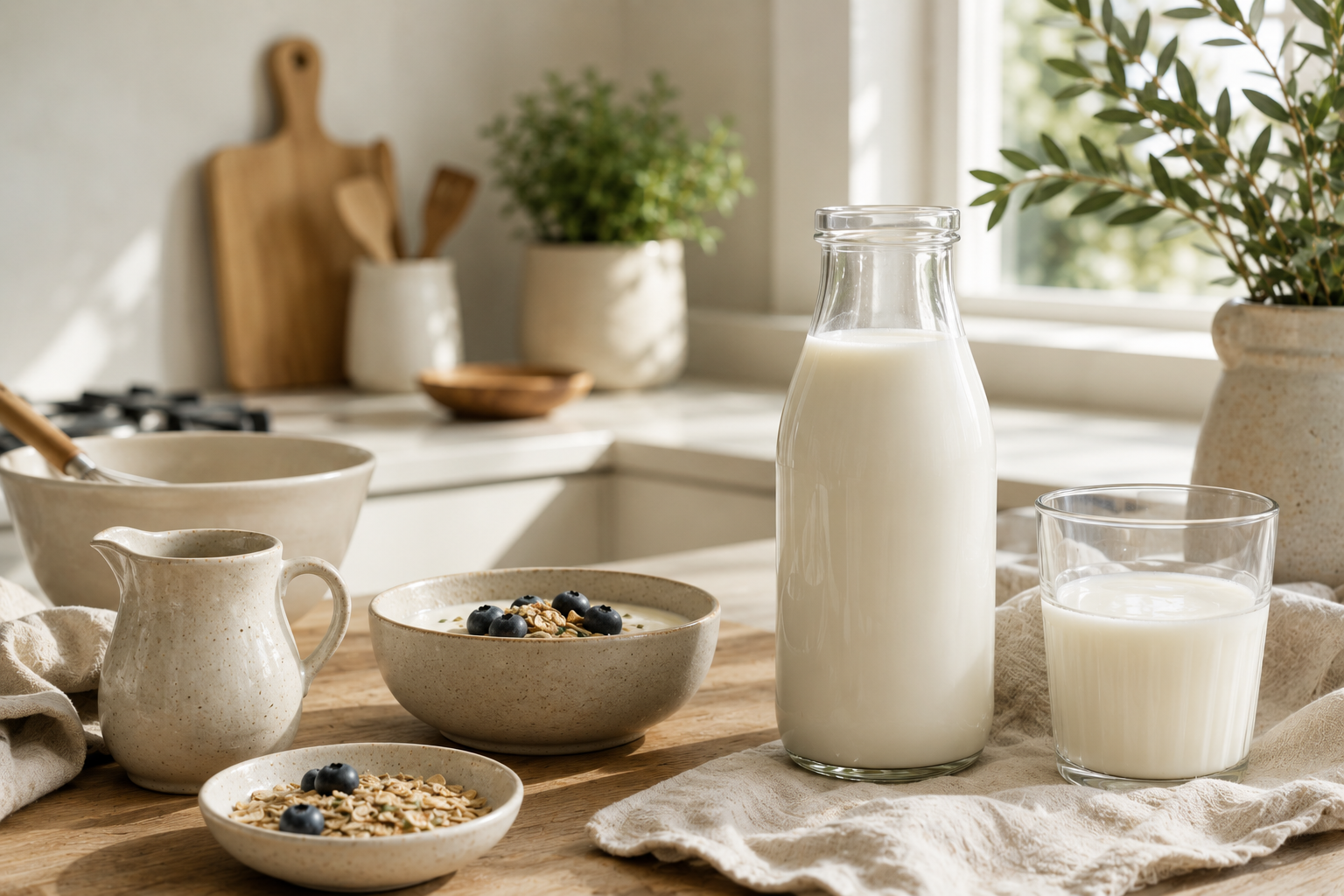
For many people, goat milk is seen as a versatile ingredient. They add it to their cereals, smoothies, or add it to their coffee or tea. Goat milk can also be used in baking and cooking.
Global Significance of Goat Milk
Goat milk is widely consumed around the world and plays an important role in global dairy production. In many regions where goat farming is prevalent, goat milk contributes a significant proportion of total dairy output, highlighting its importance as a nutritional and agricultural resource.
The goat dairy industry also supports the livelihoods of farming communities worldwide, providing income opportunities and contributing to local economies. For many families, goat farming is a valuable source of employment and financial stability. Many customers purchase goat milk products regularly, and online orders continue to increase as demand grows.
As consumer interest in goat milk continues to grow, producers are investing in innovation, improved farming practices, and expanded production capabilities to meet increasing demand. Today, consumers have access to a wider range of goat milk products than ever before, making it easier to incorporate goat milk into everyday nutrition. During a sale, shoppers often add these items to their cart before completing their purchases.
Important Aspects to Take into Account for Families
Goat milk is enjoyed by people around the world and is valued for its unique nutritional profile. As with any dairy product, it is important for consumers to understand its intended use and suitability for different life stages.
Whole goat milk is not suitable as a replacement for children formula, as children have specific nutritional requirements that cannot be met by goat milk alone. However, for older children and adults, goat milk can be enjoyed as part of a balanced and varied diet.
Many consumers are drawn to goat milk because it naturally contains protein, vitamins, minerals, and calcium. It is also used in a wide range of dairy products and nutritional applications. Research has highlighted certain characteristics of goat milk, including its unique protein structure, which has contributed to growing consumer interest in this dairy option.
When choosing goat milk products, consumers should consider factors such as product quality, freshness, sourcing, and manufacturing standards. Understanding how a product is produced can help consumers make informed decisions that best suit their individual needs and preferences. No matter which product is chosen, the important thing is to ensure that it is safe, produced under high standards, and able to work effectively as part of a balanced diet.
Disclaimer
This article is provided for educational and informational purposes only.