%201.svg)








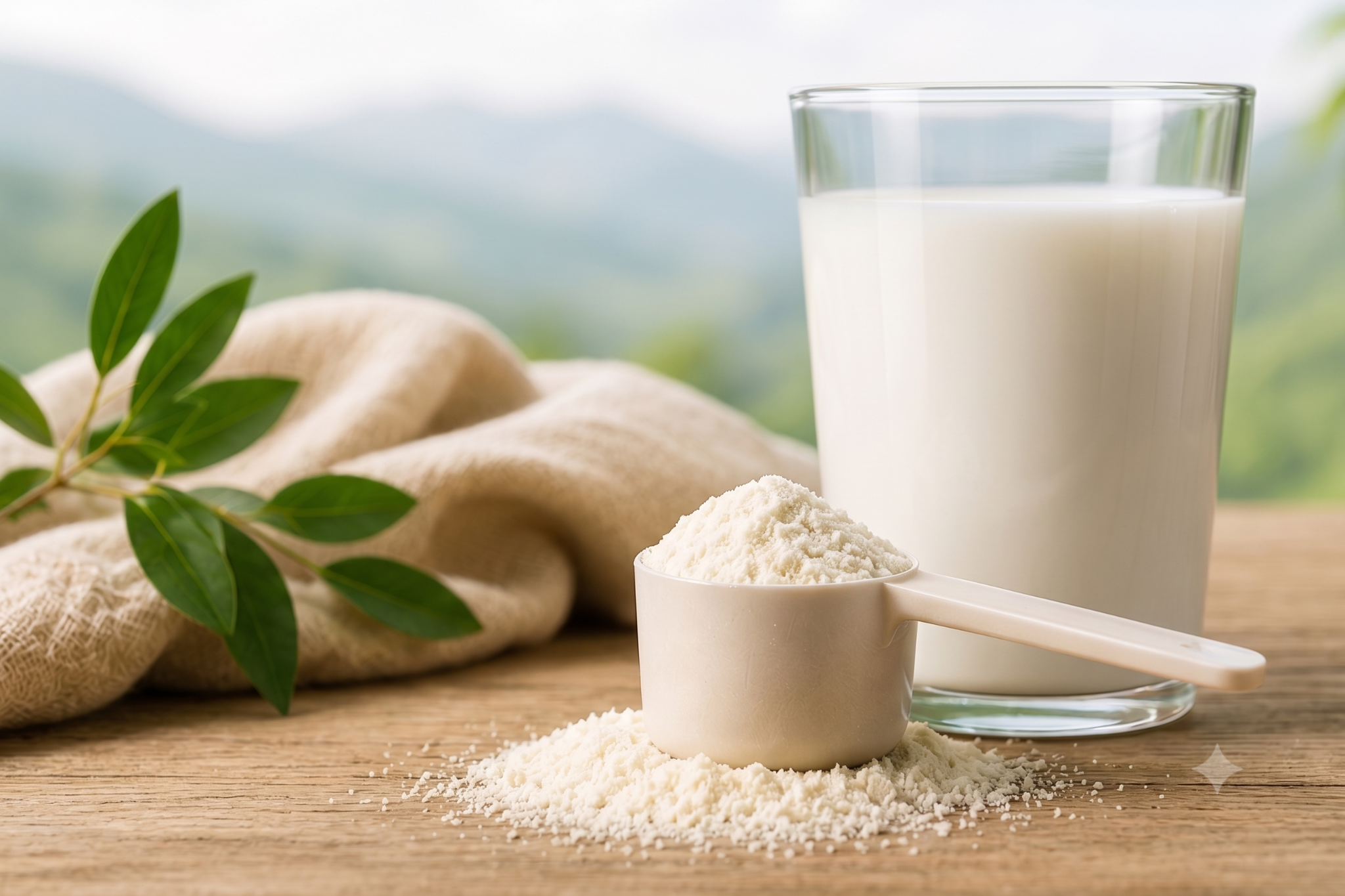
Selecting the right goat milk formula is an important decision for many parents who want a nutritionally complete milk formula for their little one during the early life stage. While maternal milk remains the recommended maternal nutrition source where possible, a specially formulated goat milk formula may be a suitable choice when maternal feeding is not possible or additional feeding is required.
Modern goat milk formula is carefully developed to provide balanced nutrition that supports normal development. It contains essential protein, carbohydrates, healthy fats, vitamin and minerals, making it nutritionally complete for healthy children when used according to the feeding guide provided on the packaging.
This article will explore the nutritional composition of goat milk formula, how it compares with cow's milk formula, and the important nutrients that contribute to healthy growth during the early life stage.
Goat milk formula is a milk-based formula that is derived from goat milk. Unlike plain goat milk, which should never be used as the sole feed for young children under 12 months of age, goat milk formula is carefully fortified with essential nutrients to meet nutritional requirements.
Every high-quality goat milk formula contains a balanced blend of fats, protein, vitamins and minerals in appropriate quantity. It also includes nutrients such as docosahexaenoic acid (DHA), arachidonic acid (ARA), and important micronutrients that support normal growth.
Current studies suggest that both goat milk formula and cow's milk formula are suitable nutritional options for healthy little ones when prepared correctly and used under the guidance of a healthcare professional.
Nutritional Composition of Goat Milk Formula
The nutritional composition of goat milk formula includes several key nutrients that contribute to balanced nutrition.
Protein
One of the defining characteristics of goat milk protein is its naturally lower level of αS1-casein compared with cow's milk. Additionally, goat milk naturally contains A2 beta casein, which does not produce BCM-7 during normal digestion.
Current research continues to explore the potential benefits of these natural characteristics, although every little one is different.
It is important to remember that young children with a cow's milk protein allergy may also react to goat milk protein, so goat milk formula is not considered a suitable alternative in those situations. Parents should always consult a healthcare professional before changing formula.
Carbohydrates and Lactose
Like most milk formula, goat milk formula contains lactose as its primary carbohydrate source. Lactose provides energy while supporting normal nutrient absorption.
Many modern formulas also include naturally occurring oligosaccharides and added prebiotics that contribute to a balanced nutritional profile.
Compared with cow's milk formula, goat milk formula naturally contains more oligosaccharides, which are receiving increasing research attention. Current studies suggest these naturally occurring carbohydrates may play a supportive role within the digestive system.
Healthy Fats
Fat is one of the primary energy sources during the early life stage.
Goat milk naturally contains more short and medium-chain fatty acids than cow's milk. These fatty acids are more readily utilised during normal digestion and contribute to the overall nutritional composition.
Most modern goat milk formula products are also fortified with docosahexaenoic acid (DHA) and arachidonic acid (ARA) to support normal brain and eye development.
Vitamins and Minerals
High-quality goat milk formula supplies a broad range of essential vitamins and minerals required during the early life stage.
Important nutrients include:
- Vitamin A
- Vitamin D
- Vitamin C
- Vitamin E
- Iron
- Calcium
- Zinc
- Selenium
- Potassium
- Phosphorus
- Iodine
Naturally, goat milk contains higher levels of vitamin A, potassium and selenium than cow's milk. During manufacturing, additional nutrients are carefully added to ensure the finished formula is nutritionally complete.
Some formulations also include ingredients such as magnesium chloride to help achieve the desired mineral balance.
Digestion and Sensitive Tummies
One reason many parents become interested in goat milk formula is its natural protein and fat composition.
Current studies suggest that goat milk forms softer curds during digestion than cow's milk rather than the harder curds often associated with some dairy proteins.
Because of these natural characteristics, some parents report that goat milk formula feels naturally easy for their little one's sensitive tummies. However, individual experiences vary, and no formula is suitable for every child.
Research also continues to explore whether these characteristics may contribute to improved feeding comfort in some situations, although additional evidence is still developing.
Goat Milk Formula Compared with Cow's Milk Formula
Both goat milk formula and cow's milk formula are carefully developed to provide balanced nutrition.
There are several similarities between them:
- Both are nutritionally complete for healthy growth.
- Both contain balanced levels of protein, fats and carbohydrates.
- Both are fortified with essential vitamins and minerals.
- Both include docosahexaenoic acid, arachidonic acid, iron and other nutrients that support normal development.
- Both are produced under strict quality standards.
There are also some natural differences in the source milk, including protein structure, fatty acid profile and naturally occurring oligosaccharides, which researchers continue exploring.
Choosing a Suitable Goat Milk Formula
Selecting a goat milk formula involves more than simply choosing a product from the shelf. Every little one has unique nutritional needs, and parents should consider age, nutritional requirements and individual feeding circumstances before making a decision.
Goat milk formula is designed to provide balanced nutrition during the early life stage; however, it is important to follow the recommended feeding guide and prepare every bottle exactly as instructed to ensure the correct nutrient quantity.
When questions arise about changing a milk formula, persistent feeding concerns or growth, seeking advice from a healthcare professional is recommended. A healthcare provider can help determine whether a particular formula is a suitable choice for a little one.
Quality Matters When Choosing Formula
The quality of ingredients and manufacturing processes plays an important role in producing a reliable milk formula. High-quality formulas are carefully produced using tested ingredients to help ensure nutritional consistency from one stock batch to another.
Current research has also highlighted the importance of monitoring trace levels of naturally occurring environmental contaminants, including heavy metals, in food products. While only trace amounts may be present, choosing trusted manufacturers that maintain rigorous quality testing provides additional reassurance for families.
Regardless of the source, every goat milk formula should be nutritionally balanced and specifically designed for young children rather than relying on plain goat milk, which does not provide appropriate nutrition for the early life stage.
Supporting Healthy Development Through Balanced Nutrition
Nutrition during the early life stage provides the building blocks for normal growth and development. A balanced goat milk formula supplies energy from carbohydrates, essential fats and high-quality protein, together with important vitamins and minerals.
Many formulations include DHA and arachidonic acid, nutrients that are commonly added to goat milk formula to support normal brain and visual development. Additionally, ingredients such as prebiotics and naturally occurring oligosaccharides contribute to the overall nutritional composition.
Current studies suggest that the combination of these nutrients may support general wellbeing during the early life stage when consumed as part of an appropriate feeding routine. However, nutritional needs vary between children, making personalised advice valuable whenever feeding questions arise.
Common Questions About Goat Milk Formula
Is Goat Milk Formula Suitable for Every Little One?
Although goat milk formula is nutritionally complete for healthy children, it is not suitable for every situation. Young children with a cow's milk protein allergy may also react to goat milk protein because the proteins share many similarities. In these cases, parents should consult a healthcare professional before changing formula.
Is Plain Goat Milk the Same as Goat Milk Formula?
No. Plain goat milk and goat milk formula are very different products. Plain milk does not provide the balanced nutritional composition required during the early life stage and should not replace a specially formulated milk formula.
Can Goat Milk Formula Support Digestion?
Current studies suggest that the natural protein composition, softer curd formation and higher levels of short and medium-chain fatty acids found in goat milk may contribute to comfortable digestion for some little ones. Some research has also explored whether these characteristics may help reduce occasional colic symptoms, although further evidence continues to develop and individual experiences vary.
How Does Goat Milk Differ Naturally?
Compared with cow's milk, goat milk naturally contains lower levels of αS1-casein, naturally occurring A2 beta casein, more short and medium-chain fatty acids, higher levels of selenium, and more naturally occurring oligosaccharides. These natural differences continue to be the subject of ongoing nutrition research.
Practical Feeding Tips for Parents
Using goat milk formula correctly is just as important as choosing the right product.
Some practical tips include:
- Always follow the manufacturer's feeding guide.
- Prepare every bottle using the recommended water-to-powder ratio.
- Store unopened stock according to the package instructions.
- Use prepared formula within the recommended time.
- Keep feeding equipment clean before every feed.
- Speak with a healthcare professional if your little one experiences persistent feeding concerns.
Following these simple steps helps ensure that goat milk formula provides the intended nutritional balance.
Understanding the nutritional profile of goat milk formula helps parents make informed feeding decisions for their little ones. A specially formulated goat milk formula provides balanced protein, carbohydrates, healthy fats, vitamin and minerals that contribute to normal growth and development during the early life stage.
Current studies suggest that the natural characteristics of goat milk, including its protein composition, softer curd formation, naturally occurring A2 beta casein, short and medium-chain fatty acids, selenium and oligosaccharides, continue to attract scientific interest. At the same time, both goat milk formula and cow's milk formula remain nutritionally complete options for healthy infants when prepared and used correctly.
Every little one is unique. Working with a healthcare professional and following the recommended feeding guide can help families choose a suitable choice that aligns with their child's nutritional needs.
Disclaimer
This article is provided for educational and informational purposes only. It is not intended to replace personalised advice from a qualified healthcare professional. Every little one has individual nutritional needs, and feeding decisions should be made in consultation with an appropriate healthcare provider where required.